Greenery and daylight are the strongest positives
Access to greenery (4.5) and daylight and views (4.4) scored highest across all groups. Patients linked garden views to feeling calmer during their stay.
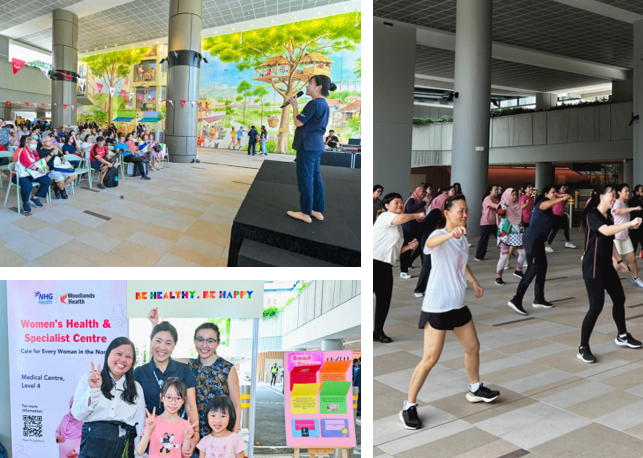
Image source: obtained from publicly available online sources.
PROJECT OVERVIEW
Post-occupancy evaluation (POE) assesses how a building performs in practice. While Woodlands Hospital is still in its early years of operation, initial observations provide valuable insights into the campus's effectiveness in delivering sustainable, people-centred and integrated healthcare
Post-Occupancy Evaluation (POE) records how the people who use a building experience it, and compares their responses with the design intent (Preiser, Rabinowitz and White, 1988). The illustrative findings below are presented in the format of a typical occupant satisfaction survey, using a 5-point scale across patients, staff, visitors and the community.
15
Patients
5
Staff
15
Visitors
15
Community
Total
50
responses
Mean score out of 5, with the share of respondents who were satisfied or very satisfied.
| Factor (mean /5) | Patients | Staff | Visitors | Community |
|---|---|---|---|---|
| Thermal comfort | 3.6 | 3.0 | 3.5 | 3.7 |
| Acoustics and noise | 3.0 | 3.3 | 3.4 | 3.9 |
| Wayfinding | 3.8 | 4.0 | 3.1 | 3.4 |
| Access to greenery | 4.3 | 4.4 | 4.6 | 4.8 |
Highlighted scores fall below 3.5.
Access to greenery (4.5) and daylight and views (4.4) scored highest across all groups. Patients linked garden views to feeling calmer during their stay.
Acoustics scored lowest (3.2). Patients rated it 3.0, most often citing equipment alarms, trolleys and conversations at night.
Staff gave thermal comfort the lowest score of any group (3.0), mainly in semi-outdoor link corridors and busy nurse stations in the afternoon.
Visitors rated wayfinding 3.1, against 4.0 for staff. Comments pointed to the size of the campus and similar-looking towers.
“Seeing the trees from my bed made the days feel shorter.”
“The corridor between blocks gets warm after lunch.”
“The signs were clear once I found the right lift lobby.”
“I walk in the garden most evenings. It feels like a park.”
Occupants respond most positively to the features the design was built around: gardens, daylight and views. The weaker scores for night-time noise, warmth in semi-outdoor links and first-visit wayfinding point to where operational fine-tuning would most improve the occupant experience.
Disclaimer: The survey figures, findings and quotes on this page are illustrative dummy data created for this study. They were not collected from Woodlands Hospital occupants. The format follows typical POE occupant satisfaction surveys, with reference to Preiser, Rabinowitz and White (1988), Post-Occupancy Evaluation, and the Building Use Studies (BUS) occupant survey method (Leaman and Bordass).